The Art of Festive Typography: Why Happy Holidays is the Ultimate Handwritten Choice
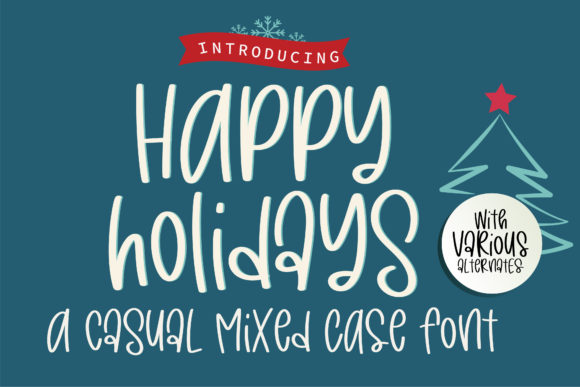
When the holiday season arrives, the atmosphere shifts. The air gets crisp, lights twinkle in windows, and suddenly, every design project seems to demand a touch of warmth and personality. This is where typography plays a pivotal role. While standard sans-serifs are perfect for data and corporate reports, they often lack the soul required for seasonal greetings. Enter Happy Holidays, a casual handwritten font that has quickly become a favorite among designers, crafters, and small business owners alike.
This typeface isn't just another decoration; it is a tool designed to bridge the gap between professional polish and personal charm. Its natural and unique style makes it incredibly fitting to a large pool of designs, ranging from elegant wedding invitations to bold promotional banners. But what exactly sets this font apart? And how can you leverage its specific features to elevate your creative projects?
Aesthetic Versatility Meets Practical Application
One of the most common challenges in holiday design is finding a font that feels authentic without looking messy. Many script fonts are too rigid or overly decorative, creating a visual disconnect with the message. Happy Holidays solves this by striking a perfect balance. It mimics the fluid motion of a marker on paper, capturing the imperfections that make handwriting so endearing.
The versatility of this font is its superpower. Because it carries such a distinct character, it adapts seamlessly to various contexts:
- Marketing Materials: Use it for eye-catching social media graphics where you want to stop the scroll with a friendly, approachable vibe.
- Print Media: From holiday cards to gift tags, the organic strokes add a tactile feel that digital text often lacks.
- Web Design: When used as a display font for headers, it adds immediate emotional resonance to landing pages during the festive period.
The only limit is your imagination. Whether you are designing a cozy coffee shop menu for winter or a high-energy party invitation, the Happy Holidays font provides a foundation that feels both curated and spontaneous.
Understanding PUA Encoding: A Designer's Best Friend
If you have ever struggled to find the right swash or alternate glyph in a font family, you know the frustration of limited character sets. This is where the technical architecture of Happy Holidays truly shines. The font is PUA encoded (Private Use Area), a feature that unlocks a world of possibilities for advanced users.
In simple terms, PUA encoding allows the font to access all of its glyphs and swashes with ease, bypassing the limitations of standard keyboard inputs. Instead of relying on a basic set of letters, designers can tap into an extensive library of ligatures, flourishes, and stylistic alternates. This means that the letter "H" might connect differently to an "o," or a "t" might end with a playful flourish that matches the festive theme perfectly.
For those who utilize software like Adobe Illustrator, InDesign, or Affinity Designer, this encoding opens up a workflow that prioritizes customization over automation. You aren't just typing text; you are curating a composition. You can mix and match swashes to create custom headlines that look bespoke, ensuring that no two designs ever look exactly the same. This level of control is essential for brands that need to stand out in a crowded marketplace during the holidays.
Bridging the Gap Between Digital and Analog
In an era dominated by flat design and minimalist aesthetics, there is a growing hunger for texture and warmth. People crave the feeling of a handwritten note in a digital world. The Happy Holidays font taps directly into this psychological desire. It evokes memories of writing Christmas lists, signing greeting cards, and crafting DIY decorations.
This nostalgic quality is not accidental. The font's natural flow replicates the pressure variations and ink distribution of real handwriting. When applied to a project, it instantly lowers the barrier between the creator and the viewer. It says, "I made this for you," rather than "This was generated by a computer."
Consider the scenario of a small bakery launching a holiday cookie campaign. A standard, clean font might look professional, but it feels distant. By switching to Happy Holidays, the bakery transforms their advertisement into a personal invitation. The font becomes part of the brand story, reinforcing the idea of homemade quality and care. This emotional connection is often the deciding factor in whether a customer engages with content or scrolls past it.
Practical Considerations for Implementation
While the aesthetic appeal is undeniable, successful implementation requires a bit of strategy. To get the most out of this font, it is important to understand its strengths and limitations. Here are some practical tips for integrating Happy Holidays into your workflow:
- Pairing is Key: Because Happy Holidays is a display font with strong personality, it should not be paired with other scripts. Instead, choose a clean, neutral sans-serif or serif body text to ensure readability. Let the headline do the talking while the supporting text remains legible.
- Spacing Matters: Handwritten fonts often require slightly more tracking (letter spacing) than blocky typefaces to maintain clarity. Don't crowd the letters together; give them room to breathe so the individual strokes remain distinct.
- Leverage the Swashes: Since the font is PUA encoded, take the time to explore the alternate characters. Using a swash at the beginning or end of a word can create a sense of movement and guide the reader's eye across the page.
- Color and Texture: To enhance the handwritten effect, consider applying subtle textures like paper grain or watercolor washes behind the text. This further blurs the line between digital and physical media.
Adapting to Modern Creative Workflows
The adoption of Happy Holidays fits naturally into modern design trends that prioritize authenticity and user experience. In the fast-paced world of digital marketing, speed is crucial, but so is impact. This font allows creators to produce high-quality, festive assets rapidly without sacrificing uniqueness.
For content creators and influencers, the ability to customize text quickly is invaluable. Whether it is for Instagram stories, YouTube thumbnails, or TikTok overlays, the font offers a recognizable style that can become part of a creator's visual identity. The PUA encoding ensures that even when reusing elements across different campaigns, the output never feels repetitive or generic.
Furthermore, the font's adaptability extends to cross-platform usage. A design created with Happy Holidays in a desktop application can easily be exported for web use, print production, or mobile app interfaces. Its vector-based nature (in most implementations) ensures that it scales beautifully from a tiny favicon to a massive billboard, maintaining its crisp edges and fluid curves regardless of size.
Why Creatives Are Choosing This Style
The shift towards using fonts like Happy Holidays reflects a broader cultural movement. Audiences are becoming increasingly savvy; they can spot mass-produced, template-based designs from a mile away. They respond better to content that feels human-centric and thoughtfully crafted. By choosing a font that embodies the spirit of the season, designers align themselves with the values of warmth, connection, and joy.
Moreover, the technical accessibility of PUA-encoded fonts removes the friction often associated with custom typography. There is no need for complex scripting or third-party plugins to access the full range of characters. Everything is built-in, ready to be utilized with a simple click or keystroke. This efficiency empowers designers to focus on the creative vision rather than fighting the tools.
As we move forward into a future filled with digital interactions, the need for genuine human expression will only grow. Fonts serve as the voice of our designs, and Happy Holidays speaks with a clear, cheerful, and inviting tone. It reminds us that behind every screen is a person waiting to be connected, celebrated, and remembered.
Whether you are a seasoned graphic designer or a hobbyist putting together a last-minute card, the potential of this typeface is vast. It invites experimentation, encourages playfulness, and delivers results that resonate on a deep emotional level. In the grand tapestry of holiday design, Happy Holidays stands out not just as a font, but as a sentiment made visible.