Why The Amberton Stands Out in the World of Elegant Handwritten Fonts
In the crowded landscape of digital typography, finding a typeface that bridges the gap between historical elegance and modern usability is a significant challenge. Many designers struggle to find a font that captures the fluidity of calligraphy without sacrificing readability or requiring complex workarounds. The Amberton has emerged as a compelling solution for professionals who need a handwritten style that feels authentic yet remains accessible across various platforms. Unlike many script fonts that feel rigid or overly ornamental, this typeface maintains its classy calligraphic influences while feeling contemporary and fresh.
When evaluating design resources, the decision often comes down to more than just visual appeal; it involves technical specifications, licensing flexibility, and how well the font performs in real-world applications. For adults aged 20 to 50 who are actively comparing options for branding, editorial design, or personal projects, understanding the specific attributes of The Amberton is essential. This analysis explores what makes this font distinct, how it compares to broader categories of handwritten typefaces, and when it serves as the ideal choice versus when an alternative might be necessary.
The Unique Architecture of The Amberton
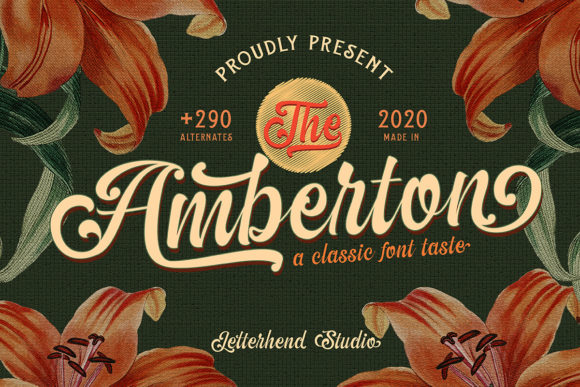
The defining characteristic of The Amberton lies in its encoding structure. It is PUA (Private Use Area) encoded, a technical detail that offers substantial advantages over standard Unicode fonts. Standard fonts often limit access to a fixed set of characters, which can restrict the inclusion of special swashes, ligatures, or stylistic alternates that give a font its personality. With The Amberton, users can access all glyphs and swashes with ease, allowing for a level of customization that mimics the natural variation found in hand-lettering.
This accessibility transforms the font from a static text element into a dynamic design tool. In professional settings, where consistency meets creativity, the ability to toggle specific swashes or alternate letterforms without switching software plugins or using complex layering techniques is invaluable. The font manages to retain the organic imperfections of a brush stroke while ensuring that the kerning and spacing remain tight enough for legibility. This balance is rare; many elegant scripts become unreadable at smaller sizes or on low-resolution screens, but The Amberton is engineered to maintain clarity.
The aesthetic result is a typeface that feels both nostalgic and current. It avoids the "fancy" trap of many decorative fonts that prioritize style over substance. Instead, it offers a sophisticated texture that elevates a project without overwhelming the content. Whether used for a wedding invitation, a luxury packaging label, or a high-end blog header, the font brings an air of exclusivity that is difficult to achieve with generic sans-serif or serif options.
Evaluating Fit: When The Amberton Shines
Choosing the right typography requires a clear understanding of the project's goals. The Amberton is not a universal solution, but it excels in specific scenarios where emotional connection and visual distinction are paramount. Its primary strength lies in contexts that demand a human touch. Digital interfaces and print materials alike benefit from the warmth that a handwritten style provides, and few fonts execute this transition as smoothly as this one.
- Branding and Identity: For businesses aiming to convey craftsmanship, heritage, or personal care, The Amberton offers a signature look. It works exceptionally well for logos, brand marks, and stationery where the goal is to establish a unique voice.
- Editorial Design: In magazines, brochures, or long-form articles, using The Amberton for pull quotes, drop caps, or section headers can break up dense text and guide the reader's eye effectively.
- Digital Marketing: Social media graphics and email newsletters often suffer from a sterile appearance. Incorporating this font adds a layer of authenticity that resonates with audiences tired of corporate uniformity.
The versatility of the font extends to its weight and style variations. While it is primarily known for its elegant script quality, the underlying structure supports integration with other type families. A common best practice is pairing The Amberton with a clean, neutral sans-serif. This contrast ensures that the body text remains highly readable while the headlines capture attention. This strategy leverages the strengths of both styles, creating a harmonious typographic hierarchy.
Comparative Analysis: Strengths and Tradeoffs
To make an informed decision, it is helpful to compare The Amberton against the broader category of handwritten and calligraphic fonts. Many alternatives in this space rely heavily on OpenType features that require advanced software knowledge or specific operating systems. In contrast, the PUA encoding of The Amberton simplifies the workflow for designers who may not have access to the latest versions of industry-standard tools. This technical advantage reduces friction during the design process.
However, no single font is perfect for every situation. One potential tradeoff to consider is the specificity of the style. Because The Amberton leans heavily into a classic, almost Victorian-inspired elegance, it may clash with projects targeting a futuristic, minimalist, or industrial aesthetic. If a brand identity requires a stark, geometric, or ultra-modern feel, the organic curves of this font might introduce too much softness. In such cases, a geometric sans-serif or a structured slab serif would likely be a more appropriate choice.
Another factor in the comparison is the density of the character set. Some handwritten fonts offer a vast library of alternates that can lead to inconsistency if not managed carefully. The Amberton strikes a balance by providing enough variety to keep designs interesting without encouraging over-decoration. This restraint is a key differentiator. It allows designers to create polished looks without the risk of the text appearing cluttered or chaotic. The font encourages thoughtful application rather than indiscriminate use.
When weighing The Amberton against free alternatives, the value proposition becomes even clearer. Free fonts often lack the refinement in stroke modulation and the robust encoding that professional typefaces possess. While they may serve a quick mockup purpose, they frequently fall short in final production. Investing in a font like The Amberton ensures that the final output maintains high fidelity across different mediums, from large-format printing to mobile displays.
Navigating Limitations and Decision Factors
Understanding when The Amberton is the right choice also involves recognizing its limitations. The most critical factor is legibility at scale. While the font is designed for clarity, extended paragraphs of text in this style are generally not recommended. The complexity of the letterforms can cause reading fatigue if used for body copy. Designers should treat it as a display typeface, reserving it for titles, captions, and short phrases.
Additionally, compatibility with older web browsers or legacy systems can sometimes be a concern with PUA-encoded fonts. While modern design environments handle these characters seamlessly, it is important to test the font rendering in the specific environments where the final product will be viewed. If the project targets a very broad audience with diverse device capabilities, ensuring fallback options are in place is a prudent step. This preparation ensures that the design remains intact even if the specific glyphs do not render perfectly on every screen.
For those exploring alternatives, the decision matrix should focus on the intended emotional response. If the goal is to evoke tradition, romance, or artisanal quality, The Amberton is a strong contender. If the goal is neutrality, speed, or functional clarity, a different category of typeface is preferable. There is no superior option in absolute terms; there is only the option that best fits the specific constraints and objectives of the project.
Making the Final Choice
Ultimately, the selection of a typeface is a strategic decision that impacts the perception of a brand or message. The Amberton offers a unique combination of technical accessibility and aesthetic refinement that sets it apart in a saturated market. Its ability to deliver a handmade feel through digital means makes it a powerful tool for designers seeking to elevate their work. By understanding its encoding benefits, its stylistic niche, and its practical limitations, professionals can determine if it aligns with their creative vision.
Whether you are launching a new venture, redesigning an existing identity, or simply looking to add a touch of class to a personal project, taking the time to evaluate The Amberton against your specific needs is a wise investment. It represents a commitment to quality and detail, ensuring that the final output reflects the highest standards of design. As you move forward with your next project, consider how this font might bring your ideas to life with the elegance and freshness it was designed to provide.