Why Marseilla Stands Out in Modern Handwritten Design
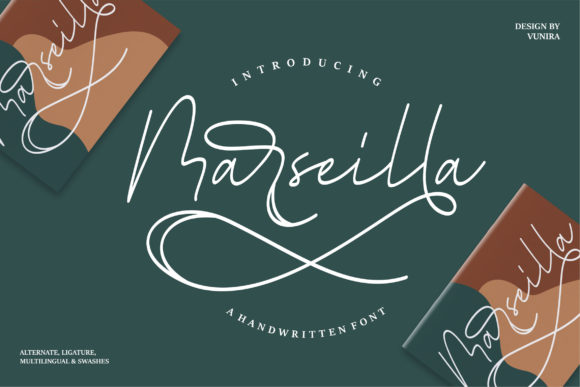
In a digital landscape dominated by rigid sans-serifs and geometric grotesques, finding a typeface that captures genuine human warmth without sacrificing legibility is a persistent challenge. Marseilla enters this space not as a novelty, but as a sophisticated solution for designers who require a handwritten touch that feels authentic rather than forced. It is a stylish script font characterized by its incredible elegance, offering a fluidity that mimics the natural flow of calligraphy while maintaining the structural integrity required for professional applications.
Unlike many decorative fonts that struggle to render correctly across different platforms or appear too chaotic for business use, Marseilla strikes a delicate balance between artistic flair and functional design. Its curves are deliberate, and its spacing is calibrated to ensure readability even at smaller sizes. This makes it an exceptional choice for projects where personality matters, yet clarity remains paramount. Whether you are crafting a high-end wedding invitation or rebranding a boutique lifestyle label, the versatility of this font allows it to adapt seamlessly to various contexts.
The Core Characteristics of Marseilla
To understand the value of Marseilla, one must look beyond its aesthetic appeal and examine its technical construction. The font is designed with a distinct rhythm; the strokes vary in thickness much like they would with a broad-nib pen, creating a dynamic visual texture. However, unlike traditional calligraphy which can be difficult to read if overused, Marseilla maintains consistent character recognition. The ligatures—the connections between letters—are intelligent, linking naturally without creating awkward loops or collisions that often plague other script families.
This attention to detail extends to the weight and slant of the characters. The slight forward inclination gives the text a sense of movement and urgency, making it feel alive on the page. Yet, it does not lean so far that it becomes illegible. The terminal points, where the strokes end, are tapered elegantly, adding a layer of refinement that elevates the overall presentation. For professionals who have spent years curating typefaces, these nuances are what separate a generic "handwritten" font from a premium asset like Marseilla.
Furthermore, the font family likely includes a range of weights and styles, allowing for hierarchy within a single design. Using a lighter weight for body text alongside a bolder variation for headlines creates depth and guides the reader's eye effectively. This flexibility is crucial for modern web design and print layouts where visual interest must be maintained without overwhelming the content.
Practical Applications Across Industries
The utility of Marseilla extends well beyond simple decoration. Its primary strength lies in its ability to convey emotion and brand identity instantly. When used in wedding invitations, it sets a tone of romance and exclusivity. The elegant loops suggest tradition and care, which resonates deeply with couples planning their special day. Similarly, for thank you cards, the personal touch provided by the script format reinforces the sentiment of gratitude more effectively than a standard serif or sans-serif typeface could.
However, the font's utility is not limited to the ceremonial. In the realm of branding, logos designed with Marseilla can communicate sophistication and artisanal quality. Small business owners, particularly those in the food and beverage, fashion, or beauty sectors, often seek a logo that implies a handmade or curated experience. A logo incorporating Marseilla can achieve this perception immediately, signaling to the consumer that attention to detail is a core value of the business.
For bloggers and publishers, Marseilla serves as an excellent tool for pull quotes, section headers, and featured text. It breaks up dense blocks of text, adding a visual break that encourages reading. In greeting card design, whether for holidays or birthdays, the font adds a layer of personalization that mass-produced templates often lack. Even for business cards, using Marseilla for the name or title can create a memorable first impression, distinguishing the holder in a stack of generic corporate cards.
Evaluating Quality and Usability
When selecting a font for long-term use, reliability is just as important as style. Marseilla demonstrates a high level of consistency in its kerning and spacing. Poorly kerned scripts can make text look jagged or uneven, detracting from the intended elegance. With Marseilla, the spacing appears intentional, ensuring that words sit comfortably together. This consistency is vital for maintaining a professional appearance across different media, from high-resolution print to low-resolution mobile screens.
Usability is another critical factor. Many script fonts suffer from compatibility issues, rendering poorly on older browsers or specific operating systems. While no font is immune to all technical quirks, Marseilla is generally engineered with cross-platform compatibility in mind. This ensures that the designer's vision is preserved regardless of where the final product is viewed. For freelancers and agencies managing multiple client projects, this reliability reduces the risk of last-minute errors and revisions.
The font also offers a degree of customization. Because it mimics handwriting, it pairs exceptionally well with other typefaces. A common best practice is to combine Marseilla with a clean, neutral sans-serif. The contrast between the flowing script and the structured geometry creates a balanced composition. The script draws attention, while the sans-serif provides stability and readability. This pairing strategy allows designers to leverage the emotional impact of Marseilla without compromising the informational clarity of the design.
Who Benefits Most from This Typeface?
Professionals who prioritize brand storytelling will find Marseilla particularly valuable. Entrepreneurs launching a new venture often need to establish an immediate connection with their audience. A font like Marseilla can help bridge the gap between a corporate entity and a personal brand. It suggests that there is a real person behind the business, fostering trust and relatability.
Creators and hobbyists who produce physical goods, such as stationery, packaging, or custom apparel, will also appreciate the quality of this font. The ability to print crisp, clear lettering on various materials is essential for these users. The elegance of Marseilla ensures that the final product looks polished and expensive, even if the production costs are modest. This perceived value can significantly impact sales and customer satisfaction.
Marketers looking to enhance email campaigns or social media graphics will find Marseilla effective for increasing engagement. Visual content that stands out is more likely to capture attention in a crowded feed. The unique style of the font can serve as a signature element, helping to build a recognizable visual identity for a campaign or a personal brand.
Considerations and Limitations
While Marseilla is a powerful tool, it is not a universal solution. Like any script font, it requires thoughtful application. Overusing it can lead to visual clutter and reduce readability. It is generally not suitable for large blocks of body text, legal disclaimers, or technical documentation where precision and neutrality are required. Designers must exercise restraint, using Marseilla as a highlight rather than the foundation of the entire layout.
Additionally, the font may not align with brands seeking a minimalist or industrial aesthetic. If a company's identity is built around stark efficiency and modernism, the ornate nature of Marseilla might clash with their core values. In such cases, a more understated typeface would be a better fit. Understanding the context of the project is essential before integrating this font into a design system.
Finally, licensing and availability should always be verified. Ensuring that the font is legally licensed for commercial use is a fundamental step for any professional. Once these practical considerations are addressed, Marseilla offers a robust and versatile option for adding a touch of elegance to a wide array of design challenges.
Ultimately, Marseilla represents a thoughtful evolution in script typography. It respects the traditions of calligraphy while embracing the demands of modern digital design. For those willing to invest time in mastering its usage, it provides a reliable path to creating designs that are both beautiful and effective. By balancing style with substance, it proves that a handwritten font can still hold its own in a highly competitive visual environment.