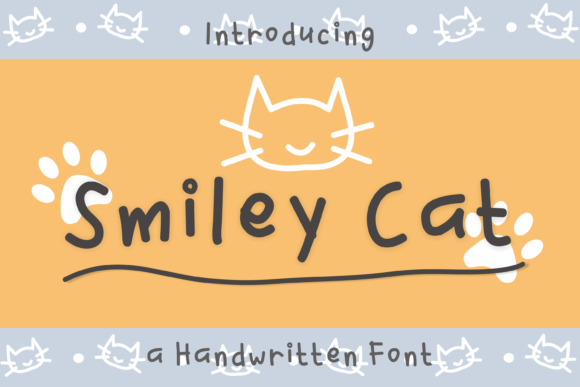
Smiley Cat: The Friendly Handwritten Font for Creative Projects
In a digital landscape dominated by rigid sans-serifs and corporate serifs, Smiley Cat offers a refreshing departure. It is not just another typeface; it is a handwritten style that brings an immediate sense of warmth and approachability to any design. For professionals, creators, and entrepreneurs looking to humanize their brand or add a personal touch to their work, this font provides a natural solution that feels both unique and incredibly versatile.
The charm of Smiley Cat lies in its organic nature. Unlike fonts that are forced to look casual, this typeface captures the fluidity of actual handwriting. Its curves are soft, its spacing is relaxed, and it carries a personality that instantly engages the viewer. Whether you are designing a blog post, creating marketing materials, or crafting educational content, the only limit is your imagination when it comes to applying this versatile tool.
Understanding the Character of Smiley Cat
When we talk about Smiley Cat, we are discussing a font that bridges the gap between professional polish and personal expression. It retains the legibility required for business communication while injecting the character often missing from standard typography. This balance is crucial for anyone trying to connect with an audience on a deeper level.
The font's structure is defined by its natural flow. It mimics the slight variations found in human writing, avoiding the robotic uniformity of many digital typefaces. This "imperfect" quality is actually its greatest strength. In a world where users are bombarded with perfectly aligned, sterile content, Smiley Cat stands out because it looks like it was written by a real person. This authenticity builds trust, a key component in effective branding and user experience design.
- Natural Flow: The letterforms follow a hand-drawn rhythm that feels organic rather than manufactured.
- High Legibility: Despite its playful appearance, the characters remain clear and easy to read across various sizes.
- Versatile Tone: It can convey friendliness without sacrificing professionalism when used correctly.
Practical Applications Across Industries
The utility of Smiley Cat extends far beyond simple decoration. Because of its wide appeal, it serves as a powerful asset in diverse environments, from high-stakes business presentations to cozy hobbyist projects. Understanding where to deploy this font effectively can significantly enhance the impact of your visual communication.
Branding and Marketing Materials
For small business owners and freelancers, establishing a distinct identity is paramount. Using Smiley Cat in logos, social media graphics, or email signatures can set a brand apart from competitors who rely on generic templates. It suggests a company that values community and approachability. Marketers can use it to highlight call-to-action buttons or special offers, drawing the eye with its distinctive shape while maintaining readability.
Educational Content and Publishing
Educators and bloggers know that engagement is the currency of the digital age. When creating worksheets, lesson plans, or blog headers, Smiley Cat can make complex information feel more accessible. Students and readers are more likely to engage with material that feels inviting rather than intimidating. Publishers might find this font ideal for children's books, activity guides, or newsletters where a friendly tone is essential.
Digital Design and User Interfaces
In the realm of web and app design, typography plays a massive role in user experience (UX). While body text usually requires a neutral font, headings and interface elements benefit from personality. Implementing Smiley Cat for headers, navigation menus, or error messages can soften the interaction, making the technology feel less cold and more helpful. It transforms a standard interface into a conversational partner.
Enhancing Communication and Engagement
Why does the choice of font matter so much? The answer lies in psychology. Typography influences how a message is perceived before the reader even processes the words. A harsh, geometric font can signal authority but also distance. Conversely, a handwritten style like Smiley Cat signals empathy and connection.
This font is particularly effective for improving engagement rates. When a user sees a font that resembles a note from a friend, they are psychologically primed to be more receptive. This is invaluable for campaigns aiming to build loyalty or encourage action. By reducing the cognitive load associated with reading stiff, formal text, Smiley Cat allows the message to land more naturally.
Furthermore, the font supports efficiency in content creation. Instead of spending hours trying to manually adjust kerning or select a font that "feels right," designers can rely on the inherent balance of Smiley Cat. It eliminates the guesswork, allowing creators to focus on the strategy and substance of their work rather than the minutiae of type selection.
Real-World Examples and Use Cases
To truly appreciate the potential of this typeface, consider how it functions in specific scenarios. Imagine a bakery owner creating a menu. A standard font might look clean, but Smiley Cat makes the pastries sound homemade and delicious. The font itself evokes the feeling of a chalkboard sign in a local shop.
Consider a freelancer sending a proposal to a new client. Including a header in Smiley Cat immediately sets a collaborative tone, suggesting that the freelancer is a partner rather than a distant vendor. It breaks down barriers and invites conversation.
Even in personal projects, the applications are endless. From creating custom invitations for birthdays to designing personalized journals, the font adapts seamlessly. It works equally well in large display sizes and smaller text blocks, provided the context remains appropriate. The key is to let the font's personality shine without overwhelming the content.
Selecting and Implementing Smiley Cat Effectively
While Smiley Cat is a robust tool, successful implementation requires thoughtful consideration. It is not a one-size-fits-all solution for every single line of text in a document. Overuse can lead to a chaotic visual hierarchy that confuses the reader. To get the most out of this font, treat it as a spotlight rather than a floodlight.
Start by identifying the emotional goal of your project. If you need to convey excitement, warmth, or creativity, Smiley Cat is likely an excellent choice. However, if the context demands strict formality, such as legal contracts or technical manuals, stick to more traditional typefaces. The power of the font comes from its contrast against the standard.
Pairing is also critical. Smiley Cat pairs beautifully with clean, neutral sans-serif fonts for body text. This combination creates a balanced layout where the headline grabs attention with personality, and the body text ensures clarity and readability. Avoid pairing it with other decorative or script fonts, as this can create visual clutter and reduce the overall impact.
Finally, test your designs across different devices. Since Smiley Cat relies on fine details to convey its handwritten nature, ensure it renders clearly on mobile screens and various browsers. Proper optimization ensures that the unique style reaches your audience exactly as intended, maintaining the integrity of your design regardless of the platform.
Ultimately, Smiley Cat represents a shift towards more human-centric design. It reminds us that behind every screen is a person waiting to be engaged. By incorporating this font into your workflow, you are not just choosing a typeface; you are choosing to communicate with more heart and less rigidity. As you explore your next project, remember that the right font can transform a good idea into a memorable experience.