Marttiny: A Handwritten Font for Authentic Design Projects
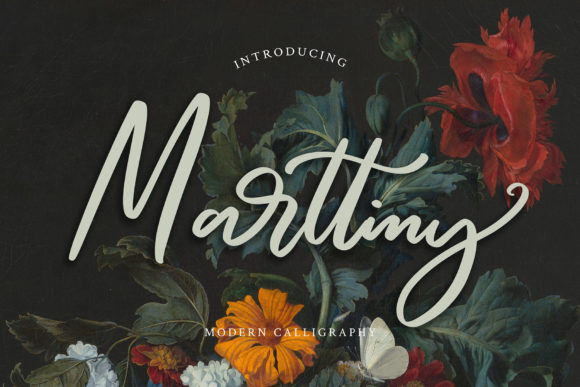
In a digital landscape saturated with geometric sans-serifs and rigid serifs, finding a typeface that conveys genuine emotion without sacrificing legibility is a persistent challenge. Marttiny addresses this specific gap by offering a timeless and flowing handwritten aesthetic that feels both organic and refined. This font is not merely a decorative element; it serves as a functional tool for designers, entrepreneurs, and creators who need to inject personality into their visual communication while maintaining professional standards.
The appeal of Marttiny lies in its ability to bridge the divide between formal typography and casual script. Unlike many handwriting fonts that suffer from inconsistent stroke weights or erratic spacing, Marttiny demonstrates a level of consistency that makes it suitable for extended text blocks, not just short headlines. Its design philosophy centers on versatility, allowing it to adapt seamlessly to various contexts ranging from high-end wedding invitations to dynamic social media graphics.
Key Characteristics and Design Philosophy
At its core, Marttiny is defined by its fluidity. The letterforms mimic the natural movement of a pen gliding across paper, yet they retain enough structure to remain readable at smaller sizes. This balance is critical for any typeface intended for commercial use. The strokes vary in thickness, creating a sense of rhythm and movement that static fonts often lack. However, the variation is controlled, ensuring that the font does not become illegible when scaled down for mobile devices or printed on textured materials.
The character set of Marttiny includes a comprehensive range of ligatures and alternate glyphs. These features allow users to customize the flow of words, connecting letters in ways that feel more natural and less mechanical. For instance, the connection between 't' and 'h' or 'i' and 'n' can be adjusted to match the specific mood of a project. This level of control is essential for professionals who require a unique brand voice rather than a generic template look.
Furthermore, the font's x-height is optimized for clarity. In many display scripts, a low x-height can hinder readability, particularly when used against busy backgrounds or complex textures. Marttiny avoids this pitfall, ensuring that the content remains accessible to a broad audience. This attention to detail suggests that the font was developed with real-world application in mind, rather than purely as an artistic experiment.
Practical Applications Across Industries
The versatility of Marttiny extends far beyond simple decoration. Its primary strength lies in its ability to elevate standard design elements into something memorable. Below are several scenarios where this font proves particularly effective:
- Wedding and Event Stationery: The most common use case for a flowing handwritten font is in event planning. Marttiny excels here because it strikes a tone of elegance and intimacy. Whether designing save-the-date cards, ceremony programs, or place settings, the font adds a layer of personal touch that serif or sans-serif fonts cannot replicate. The flowing lines suggest grace and celebration, aligning perfectly with the emotional weight of such occasions.
- Social Media Content: In the fast-paced environment of platforms like Instagram and Pinterest, visual distinction is paramount. Marttiny allows marketers to create eye-catching posts that stand out in a feed dominated by uniform corporate typography. It works exceptionally well for quote graphics, product announcements, and behind-the-scenes content where a human element is desired. The font's readability ensures that the message is conveyed quickly, even on small screens.
- Branding and Identity: Small business owners and freelancers often struggle to differentiate themselves. Using Marttiny as a logotype or a key component of a brand identity can signal creativity, craftsmanship, and approachability. It is particularly effective for brands in the lifestyle, beauty, artisanal food, and boutique retail sectors. When paired with a clean sans-serif body text, it creates a sophisticated contrast that enhances overall brand perception.
- Educational and Creative Materials: Educators and publishers can utilize this font to make learning materials more engaging. Worksheets, certificates, and presentation slides benefit from the friendly and inviting nature of Marttiny. It softens the rigidness of academic or technical content, making the information feel more accessible to students and learners.
Evaluating Usability and Technical Performance
From a technical standpoint, the usability of Marttiny is robust. One of the frequent complaints regarding handwritten fonts is poor kerning, which can lead to awkward gaps between letters that disrupt the reading flow. Marttiny appears to have been engineered with careful attention to these details. The spacing between characters feels deliberate, reducing the need for manual adjustment in most design software environments.
Reliability is another crucial factor for professionals working under tight deadlines. A font that requires constant tweaking to look right is a liability. Marttiny offers a high degree of consistency, meaning that once a style is established, it can be replicated across multiple pages or projects with minimal friction. This reliability translates directly into time savings for designers and agencies.
However, no single typeface is a universal solution. While Marttiny is highly versatile, it is important to recognize its limitations. It is primarily a display font, meaning it should generally be reserved for headlines, titles, and short phrases. Using it for large blocks of body text can fatigue the reader due to the varying stroke widths and the inherent complexity of handwritten forms. For long-form content, pairing Marttiny with a neutral, highly legible sans-serif or serif font is the recommended best practice.
Audience Fit and Strategic Value
Who benefits most from incorporating Marttiny into their workflow? The answer depends largely on the goals of the user. For creators and bloggers, this font provides a quick way to establish a distinct visual identity without needing extensive graphic design resources. It allows non-designers to produce high-quality assets that look professionally crafted.
Entrepreneurs and marketers will find value in the font's ability to convey authenticity. In an era where consumers are increasingly skeptical of polished, corporate messaging, a handwritten font can serve as a trust signal. It suggests that there is a real person behind the brand, fostering a deeper connection with the audience.
Freelancers serving clients in the wedding, fashion, or lifestyle industries will likely see immediate returns on investment by using Marttiny. It reduces the friction of explaining design choices to clients who want a "handmade" feel but may not know how to achieve it technically. The font essentially democratizes the look of custom calligraphy.
For educators and publishers, the font offers a way to break up monotony. It can be used to highlight key concepts, define sections, or add a touch of whimsy to instructional materials. The key is strategic placement; using it sparingly to draw attention to specific areas maximizes its impact.
Long-Term Value and Integration
When considering the long-term value of a font, one must look beyond immediate aesthetics. Marttiny's timeless quality suggests it will not quickly fall out of style. Trends in typography often cycle between stark minimalism and ornate maximalism. Because Marttiny sits comfortably in the middle—offering style without excess—it possesses a durability that trendy fonts often lack.
Integration into existing workflows is straightforward. The font supports standard Unicode characters, ensuring compatibility with most operating systems and design applications. This means that files created with Marttiny can be shared and opened by collaborators without requiring special plugins or conversions. For teams working remotely or across different software ecosystems, this interoperability is a significant advantage.
Ultimately, the decision to use Marttiny should be driven by the specific needs of the project. If the goal is to communicate warmth, creativity, and personal connection, this font is a strong candidate. It offers a reliable foundation for building visual narratives that resonate with audiences on an emotional level. By understanding its strengths and respecting its limitations, designers can leverage Marttiny to create work that is both beautiful and effective.
Whether you are crafting a bespoke invitation suite or launching a new brand identity, Marttiny provides the flexibility needed to execute your vision with precision. Its flowing lines and consistent performance make it a valuable asset in the toolkit of any serious creator looking to add a human touch to their digital or print output.