Leathering: The Intersection of Sophistication and Strategic Design in Modern Creativity
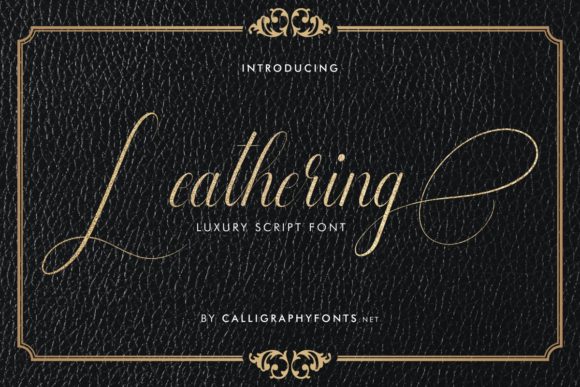
In an era where digital communication is dominated by clean, geometric sans-serifs and highly legible utility fonts, there remains a powerful counter-movement seeking to re-establish human connection through texture and personality. This movement is not merely about decoration; it is about conveying tone, status, and emotion instantly. At the forefront of this aesthetic shift is Leathering, an elegant and sophisticated script font that has captured the attention of professionals, creators, and entrepreneurs alike. It represents more than just a typeface; it is a strategic tool for brands and individuals looking to stand out in a crowded marketplace.
Leathering is designed to be ideal for your most favorite projects, offering a unique visual language that bridges the gap between traditional craftsmanship and modern digital application. Its distinct style allows designers to create breathtaking wedding invitations, birthday cards, and high-end marketing materials that feel personal and curated. But why is a specific script font generating such significant interest among industry leaders? The answer lies in the evolving landscape of consumer expectations and the demand for authentic, tactile experiences in a virtual world.
Understanding the Essence of Leathering
To understand the value of Leathering, one must first look beyond its surface appearance. It is an elegant and sophisticated script font characterized by fluid strokes, dynamic ligatures, and a sense of organic movement that mimics the hand of a skilled calligrapher. Unlike rigid or overly stylized scripts that can often appear dated or difficult to read, Leathering strikes a delicate balance between artistic flair and functional clarity.
The font's architecture is built on a foundation of versatility. Whether used for the headline of a luxury fashion brand's landing page or the salutation of a bespoke wedding invitation, Leathering adapts to the context without losing its identity. It brings a sense of warmth and exclusivity that standard fonts simply cannot replicate. When a designer selects Leathering, they are making a deliberate choice to prioritize elegance and narrative over pure minimalism.
Furthermore, the technical implementation of this font plays a crucial role in its widespread adoption. This font is PUA encoded which means you can access all of the glyphs and swashes with ease. For the uninitiated, the Private Use Area (PUA) encoding is a game-changer for professional workflows. It eliminates the frustration of missing characters or inconsistent rendering across different platforms. Designers can seamlessly integrate complex ligatures, alternate capitals, and decorative swashes directly into their software without needing third-party plugins or workarounds. This technical robustness ensures that the creative vision remains intact from the initial sketch to the final print or digital export.
Aligning with Contemporary Market Trends
The rise of Leathering is not an isolated event but rather a symptom of broader shifts occurring within the design industry, technology sector, and consumer lifestyle. As we move further into a digital-first economy, there is a growing fatigue with the homogenization of online content. Brands are realizing that to capture audience attention, they must differentiate themselves through sensory-rich experiences. Leathering offers a way to inject "digital texture" into flat screens, simulating the feeling of paper, ink, and craftsmanship.
This trend aligns perfectly with the current market preference for authenticity and heritage. Consumers are increasingly drawn to brands that tell a story and demonstrate a commitment to quality. A wedding invitation set using Leathering does more than convey information; it sets the expectation of a premium experience. Similarly, for entrepreneurs and freelancers, using this font in proposals, portfolios, or branding collateral signals a level of attention to detail that resonates with high-value clients. It suggests that the creator values aesthetics and precision, traits that are highly prized in competitive industries.
In the realm of technology, the ability to render complex typography efficiently has improved significantly. Modern web standards now support advanced typographic features that allow scripts like Leathering to shine in browser environments. This technological maturation has removed previous barriers to entry, allowing script fonts to be used confidently in responsive web design. Designers are no longer restricted to using scripts only for print; they can now weave these elegant narratives into mobile apps, email campaigns, and social media graphics, creating a cohesive brand voice across all touchpoints.
Practical Applications in Professional Workflows
For professionals and marketers, the integration of Leathering into daily workflows offers tangible benefits. Consider the scenario of a freelance graphic designer pitching to a new client. The presentation deck becomes a canvas where typography speaks volumes. By incorporating Leathering into key headers or quotes, the designer creates visual anchors that guide the viewer's eye and reinforce the message's emotional weight. This subtle use of typography can be the difference between a generic proposal and a memorable pitch.
Similarly, in the event planning sector, the demand for personalized stationery has skyrocketed. Leathering fits perfectly into this niche. Fall in love with its unique and distinct style and create breathtaking wedding invitations, birthday cards, and more. The font's ability to handle various text lengths while maintaining its character makes it suitable for everything from simple RSVP cards to elaborate ceremony programs. The inclusion of swashes and alternate characters allows for endless customization, ensuring that every piece feels bespoke and tailored to the individual.
Moreover, the efficiency provided by PUA encoding streamlines the production process. In fast-paced agency environments, time is money. The ability to quickly access and apply specialized glyphs reduces the back-and-forth between designers and developers. It minimizes errors and ensures consistency across multiple deliverables. This operational efficiency allows teams to focus more on strategy and less on troubleshooting technical limitations.
The Future of Typography and Human Connection
As we look toward the future, the role of distinctive typefaces like Leathering will likely expand. The trajectory of design is moving towards a synthesis of the analog and the digital. We are seeing a resurgence of interest in letterpress printing, handwritten notes, and artisanal packaging, all of which rely on the charm of imperfect, human-made forms. Leathering captures this spirit in a digital format, making it accessible to a global audience.
For enthusiasts and creators, the implications are profound. The availability of high-quality, well-encoded fonts democratizes access to luxury design tools. It empowers small business owners and independent artists to produce work that rivals large corporations. This leveling of the playing field fosters innovation and encourages a diverse range of voices in the design community.
Ultimately, the relevance of Leathering stems from its ability to meet changing needs and preferences. In a world that often feels cold and transactional, there is a hunger for beauty and grace. People are paying attention to Leathering because it offers a moment of pause, a chance to appreciate the artistry of language. It transforms the act of reading into an experience of discovery.
Whether you are crafting a romantic invitation, launching a new product line, or refining your personal brand, the choice of typography matters. Leathering stands as a testament to the enduring power of good design. It reminds us that even in the age of algorithms and automation, the human touch remains the most valuable asset we have. By embracing fonts that embody elegance and sophistication, professionals can create work that not only informs but also inspires and connects.
In conclusion, Leathering is more than just a font; it is a statement of intent. It declares that the project at hand deserves care, attention, and a touch of class. As the industry continues to evolve, those who embrace these nuanced tools will find themselves ahead of the curve, capable of delivering experiences that resonate deeply with their audiences. The journey of design is ongoing, and with tools like Leathering, the possibilities for expression are limitless.