Bringing Whimsy to Life: The Power of the Lovely Children Typeface
In a digital landscape saturated with rigid grids, sterile sans-serifs, and corporate minimalism, there is a distinct craving for warmth. We live in an era where authenticity is the most valuable currency, and audiences are increasingly drawn to content that feels human, approachable, and genuine. This is where Lovely Children steps onto the stage. It is not merely a font; it is a joyful and quirky handwritten style designed to cheer up each of your creative ideas. By falling in love with its sweet and unique design, creators across various sectors can craft outstanding designs that resonate on an emotional level.
The journey from a blank canvas to a finished project often hinges on the subtle choices made along the way. While many designers focus heavily on layout and imagery, the typography selected sets the fundamental tone of the entire piece. A standard font might convey information efficiently, but a personality-driven typeface like Lovely Children conveys emotion. It bridges the gap between the creator and the viewer, turning a static message into a conversation. Whether you are a professional branding expert or a hobbyist making scrapbooks, understanding how to leverage this specific aesthetic can transform ordinary outputs into memorable experiences.
The Anatomy of Joy: What Makes This Font Unique
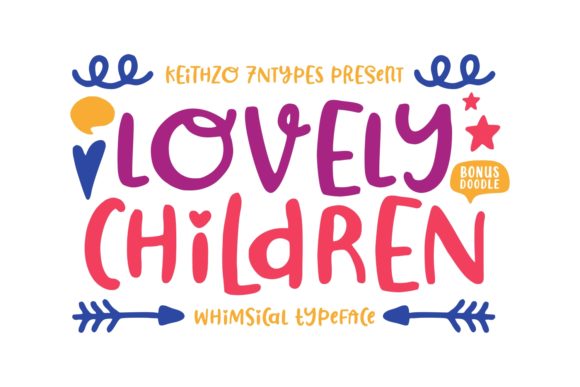
To truly appreciate the utility of Lovely Children, one must look beyond the surface-level "cute" factor and understand the structural elements that give it character. Handwritten fonts vary wildly in their execution, ranging from messy scrawls to perfectly formed calligraphy. This particular typeface strikes a delicate balance. It retains the imperfections of ink on paper—the slight wobble in the lines and the organic variation in stroke width—while maintaining enough legibility to be functional in real-world applications.
The design philosophy behind such a font is rooted in nostalgia and playfulness. The letterforms often feature exaggerated curves and playful terminals that mimic the way a child might write, or perhaps the whimsical scribbles of a creative mind in flow. This quirkiness is intentional. It breaks the monotony of the digital screen. When a user encounters text rendered in this style, their brain registers a shift from "reading mode" to "experiencing mode." The visual texture invites the eye to linger, slowing down the consumption of information and encouraging a deeper connection with the content.
Furthermore, the sweetness of the design does not come at the expense of clarity. Unlike some decorative fonts that sacrifice readability for flair, Lovely Children is engineered to remain accessible. The spacing between characters is generous, preventing the text from feeling cramped, while the height of the ascenders and descenders ensures that even small sizes remain distinguishable. This duality makes it a versatile tool rather than a niche novelty.
Visual Characteristics That Drive Engagement
- Organic Flow: The letters connect naturally, mimicking the fluid motion of a pen moving across paper.
- Playful Irregularity: No two letters are perfectly identical in their vertical alignment, creating a dynamic, bouncy rhythm.
- Soft Edges: The strokes lack harsh angles, offering a friendly and inviting appearance that reduces visual stress.
- Versatile Weight: The thickness of the lines provides good contrast against white backgrounds without overwhelming other design elements.
Bridging Professionalism and Playfulness
One of the most common misconceptions about handwritten or display fonts is that they are strictly for children's products. While Lovely Children is undeniably effective for educational materials and kids' brands, its application extends far beyond that narrow scope. In modern marketing and design, the line between professional and personal has blurred. Consumers want brands to feel human, and they respond positively to designs that show a bit of soul.
Consider the corporate world. A traditional law firm might stick to serif fonts to project stability, but a creative agency, a startup, or a lifestyle brand might choose to incorporate Lovely Children to signal innovation and approachability. Using this font for headlines, pull quotes, or accent text can soften a brand's image, making it seem more relatable and less intimidating. It allows a business owner to say, "We take our work seriously, but we don't take ourselves too seriously."
For educators and researchers, the implications are equally significant. Learning materials often suffer from being dry and text-heavy. Integrating a cheerful typeface like Lovely Children into lesson plans, worksheets, or presentation slides can significantly boost student engagement. It creates a psychological environment where learning feels like an adventure rather than a chore. The font acts as a visual cue that signals creativity and fun, which can lower anxiety levels associated with academic tasks.
Practical Applications Across Industries
The versatility of this font lies in its ability to adapt to different contexts. Let us explore how various professionals can integrate Lovely Children into their workflows to achieve outstanding results.
- Branding and Identity Design: For businesses targeting families, pet owners, or creative communities, this font serves as an excellent primary or secondary typeface. It works beautifully on logos, packaging, and social media graphics. Imagine a boutique bakery using it for their menu headers or a toy store using it for promotional banners. The font instantly communicates the brand's values of joy and quality.
- Digital Content Creation: Bloggers and content creators often struggle to make their posts stand out in a crowded feed. Using Lovely Children for subheadings or key phrases within an article can break up walls of text and guide the reader's eye. It adds a layer of personality to digital storytelling that standard fonts simply cannot replicate.
- Event Planning and Invitations: Weddings, birthdays, and community gatherings benefit immensely from the warm aesthetic of this typeface. Custom invitations, signage, and thank-you notes designed with Lovely Children set a tone of celebration and intimacy. The handwritten feel suggests that every detail was crafted with care and love.
- Educational Materials: Teachers can use this font to create engaging flashcards, classroom posters, and certificates of achievement. The unique design helps capture the attention of young learners, making the process of acquiring new knowledge more enjoyable.
- Merchandise and Print-on-Demand: Hobbyists and small business owners selling t-shirts, mugs, or tote bags find that this font translates well to physical products. It stands out on fabric and ceramic, adding a touch of artisanal charm to mass-produced items.
Strategic Implementation for Maximum Impact
While the potential of Lovely Children is vast, successful implementation requires a strategic approach. Typography is not just about picking a pretty font; it is about hierarchy, contrast, and context. To ensure your designs remain readable and professional, consider the following best practices.
Pairing is Key
Because Lovely Children is a display font with strong personality, it should generally be paired with a neutral, clean typeface for body text. A simple sans-serif or a classic serif font will provide the necessary structure to support the whimsical nature of the handwritten element. This combination creates a balanced composition where the headline grabs attention and the body text delivers the information clearly. Overusing the font by applying it to long paragraphs can lead to visual fatigue and reduced comprehension.
Contextual Relevance
Before applying the font, ask yourself if it fits the message. If you are designing a serious financial report, Lovely Children would likely be inappropriate. However, if you are writing a newsletter about community events or a blog post about work-life balance, the font becomes a powerful ally. The goal is to align the visual voice of the typography with the emotional intent of the content.
Technical Considerations
When working digitally, ensure that the font file formats are optimized for web performance. High-quality vector files (such as SVG or WOFF2) ensure that the intricate details of the handwritten strokes remain crisp on high-resolution screens. Additionally, always test the font across different devices to confirm that the spacing and rendering remain consistent. A font that looks perfect on a desktop monitor might appear slightly distorted on a mobile device if not properly configured.
The Psychology of Quirky Design
Why do we respond so positively to fonts like Lovely Children? The answer lies in the psychology of design. Humans are wired to recognize patterns, but we are also drawn to anomalies. In a sea of uniform, machine-generated text, a handwritten style stands out as a beacon of humanity. It triggers a sense of trust and familiarity because it mimics the natural imperfections of human communication.
This "imperfection" is actually a feature, not a bug. In the realm of marketing, perfection can sometimes feel cold and unattainable. A slightly wobbly line or a charmingly irregular letterform suggests effort and personal touch. It tells the viewer that a real person created this content, fostering a deeper emotional connection. This connection is crucial for building brand loyalty and community engagement.
Moreover, the color palette often associated with this font—pastels, brights, and warm tones—further enhances its positive impact. When combined with the right imagery, Lovely Children can evoke feelings of nostalgia, childhood wonder, and optimism. These emotions are highly sought after in today's fast-paced world, where people are constantly seeking moments of relief and happiness.
Future Trends in Typography
As we look toward the future of design, the trend towards personalized and expressive typography shows no signs of slowing down. With the rise of AI-generated content, there is a growing counter-movement that values human-made aesthetics. Fonts that emphasize the human hand, like Lovely Children, are becoming increasingly valuable assets in a designer's toolkit.
We are seeing a shift away from the "flat design" era towards more textured, layered, and expressive visuals. Brands are looking for ways to differentiate themselves in a crowded market, and typography offers a low-cost, high-impact solution. The ability to customize lettering or use unique display fonts allows businesses to create a distinct visual identity that is difficult to replicate.
For creators, educators, and business owners, staying ahead of these trends means embracing the power of expression. It means recognizing that a font choice is a strategic decision that influences perception, behavior, and emotion. By incorporating Lovely Children into your projects, you are not just choosing a typeface; you are choosing a mood, a story, and a way to connect with your audience on a deeper level.
Conclusion: Unleashing Creativity
In conclusion, Lovely Children represents more than just a font; it is a catalyst for creativity. Its joyful and quirky nature offers a refreshing alternative to the status quo, providing a tool that can cheer up any creative idea. From professional branding to personal hobbies, the applications are limitless. By understanding its characteristics and implementing it with care, you can create outstanding designs that leave a lasting impression. Whether you are designing a logo, a lesson plan, or a social media post, let the sweet and unique design of this typeface guide your hand. Fall in love with its charm, and watch as your projects come alive with energy and personality.